The pros and cons of do-it-yourself website builders
How do you decide between hiring a website designer versus building your website using an online, do-it-yourself site builder like Weebly, Wix, Squarespace, webs.com, or Godaddy?
 As a web design professional, it would come as no surprise that I’m likely to recommend a custom, professionally-designed service for a client’s online presence, as opposed to a do-it-yourself solution.
But let’s face it: there are occasions where an individual or business is not in the ideal position to warrant a professional, custom design, and instead may be better suited to using a do-it-yourself website builder.
In this article, we break down the benefits as well as the drawbacks to building a website utilizing a DIY website builder versus hiring a designer.
Why You Need A Website
 Occasionally a client will ask, “Does my business really need a website?”
More often than not, the answer is yes. Here’s why:
- At a minimum, your website serves as the virtual face and welcome mat of your business; a digital version of your print marketing material.
- Your company’s website is a portal through which your leads and customers can get to know you, find you, and contact you.
- Your site is an integral component of your online marketing. It lends credibility and humanness to you, your firm, and your brand, and invites consumers to connect with you.
- Good search engine optimization and effective lead capture implementation mean your website is instrumental in growing your business and customer base.
- And if designed, created, and built properly, all of this works for you 24 hours a day, seven days a week; helping you succeed and make money even as you sleep.
Now that we’ve established that having a company website is a necessity, how do you decide between hiring a website designer versus building your website using an online, do-it-yourself website builder like Weebly, Wix, Squarespace, webs.com, or Godaddy?
The right answer depends upon a variety of factors. Let’s take a look.
We Take the Hassle Out of Marketing Your Business
The Pros and Cons of Using a DIY Website Builder
First, let’s review the pros and cons of a do-it-yourself web builder platform.
 The Pros of DIY Website Builders
- Costs generally range from free website builders to low- or medium-priced tiered packages, all of which can be attractive for start-up businesses, sole proprietors, or small non-profit organizations.
- The user interface is targeted toward non-designers, meaning the site’s dashboard editor is intended to be simple. Generally, these website builders feature drag-and-drop functionality to add and manipulate content.
- For a simple site with just a few pages and limited features or functionality, you can get up and running quickly.
- No coding knowledge of HTML, CSS, PHP, or more in-depth web design platforms is required for basic setup or implementation.
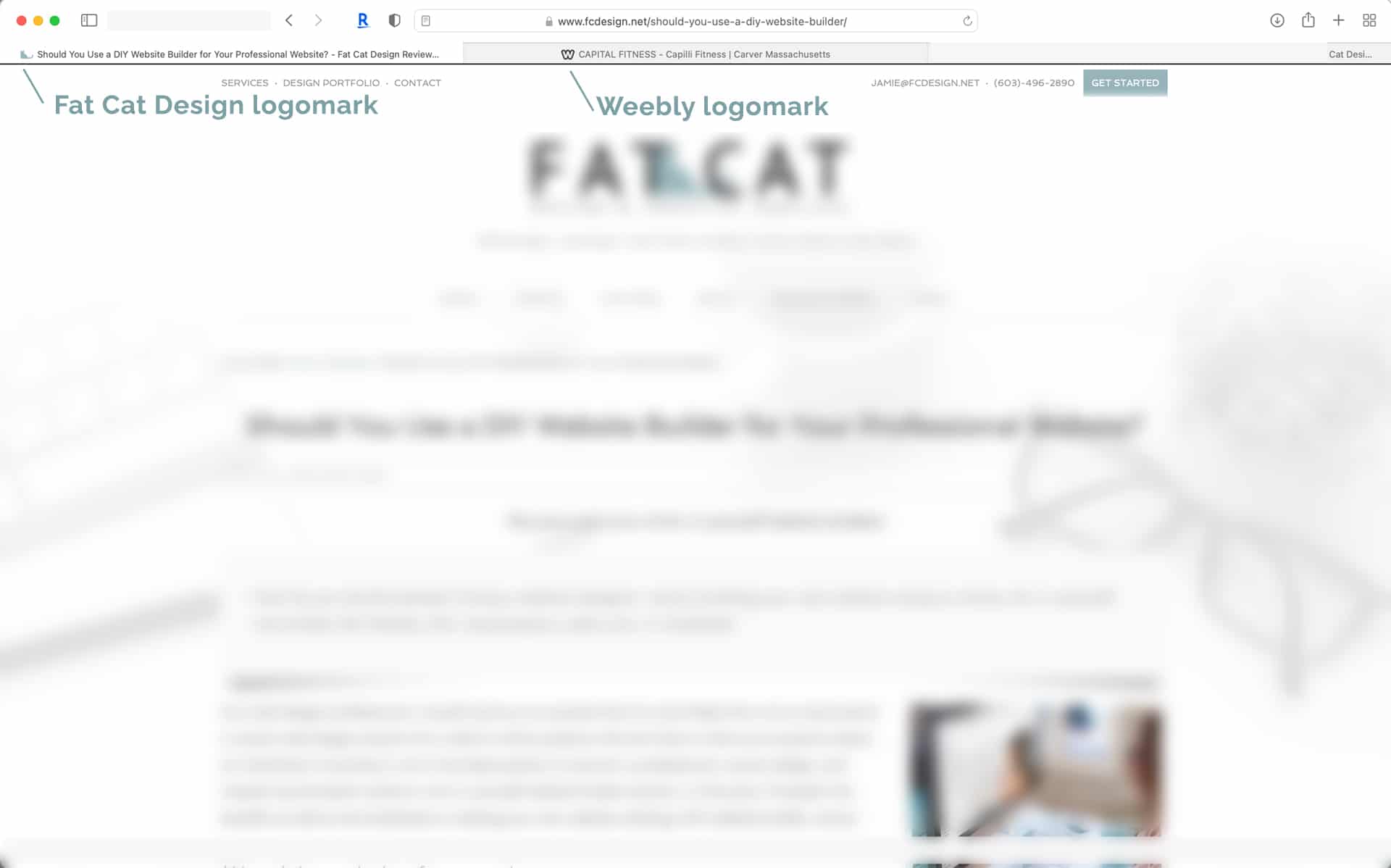
Free or freemium DIY builder plans typically force the display of their icon – not yours- in the browser, header, footer, or search results
The Cons of DIY Website Builders
- Website builder templates, while plentiful, tend to look generic and be relatively inflexible. Therefore, if you’re looking for a unique and polished online presence, this may not be the ideal solution for what you’re aiming to achieve.
- Free and even some freemium plans – a hybrid between free and pro packages – tend to have limitations that diminish the refined and professional presentation of your site. For example:
- You’ll be required to display the site builder’s logo instead of your brand logo or logomark:
- in the header or footer of your site
- as a popup or footer ad
- as a favicon (that cool icon displayed in the browser tab or bookmarks)
- in search engine results.
- Most free website builder packages require you to publish your site using a non-custom URL:
- For example, instead of acmetoolsusa.com, you may need to use the website address acmetoolsusa.wix.com.
- It should be noted that with these and other imitations, there’s no way work-around. You must opt for a higher-tier upgrade.
- You’ll be required to display the site builder’s logo instead of your brand logo or logomark:
- Native mobile-responsive design for most DIY website builder tools is sorely lacking.
- The Wix website builder, for example, provides only two customizable device views: desktop, and vertical mobile phone – and even then, the mobile phone customization options are frustratingly limited; and the Weebly website builder does not have any mobile-design adjustment options at all.
- Effective search engine results can be difficult to achieve if you’re not familiar with organic SEO techniques, and/or lack the time or resources to learn how to dive under the hood of these DIY page builders.
- Support provided by your chosen platform will likely be limited.
- Online sitebuilders tend to include inadequate support. Few offer phone support; instead, most limit their support to
- online ticketing systems with delayed response time and insufficient responses,
- outdated or inadequate knowledgebase documentation, or
- community forums that are not regularly monitored by the DIY platform developers.
- The result is a lengthy, frustrating, and wearisome process for the business owner replete with delayed response times, and/or failed resolution.
- Online sitebuilders tend to include inadequate support. Few offer phone support; instead, most limit their support to
- Although the interface is meant to be simple for non-coders to use, each one may take some time to master for the non-coder or lay-person.
The Pros and Cons of Hiring a Web Designer
Now let’s review the pros and cons of a custom website design utilizing a web designer or developer.
With a web designer, you receive the benefit of a highly personalized workflow with a professional who will conduct a deep-dive and get to know you and your business.
The Pros of Custom, Professional Website Design
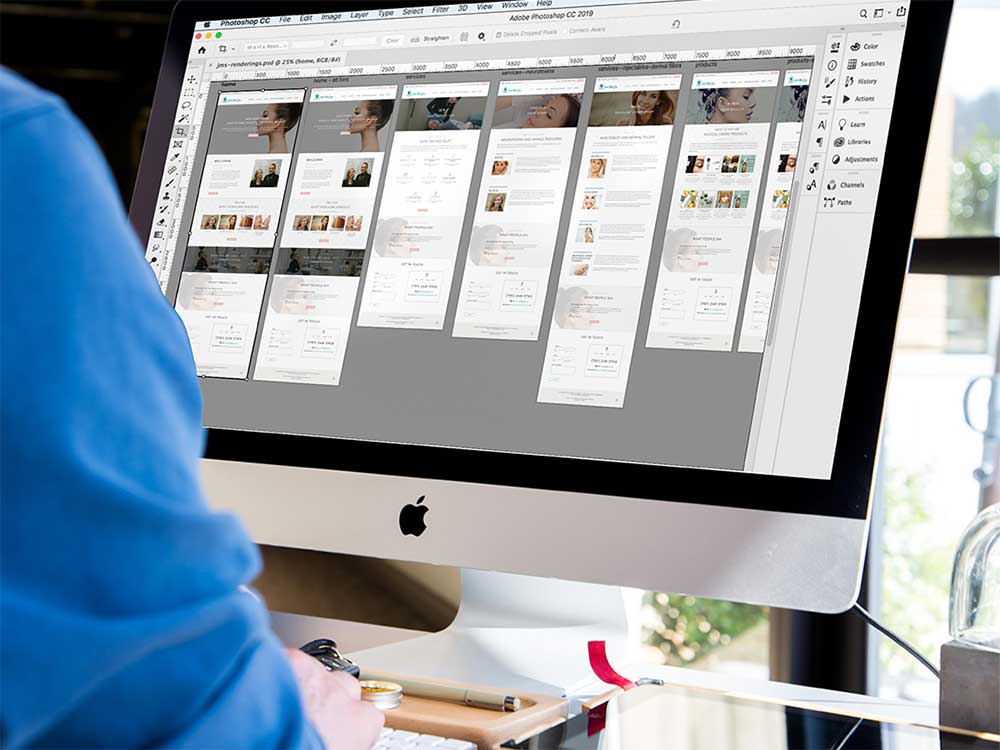
- You get a full range of unique concepts and design customization options, with aesthetics that are fully suited to your brand.
- You receive the benefit of a highly personalized workflow with a professional designer who will take a deep-dive and get to know you and your business.
- Your custom solution is crafted to address your business’ specific needs and measurable goals.
- Your site’s URL – your website address – reflects a professional website address using your custom branded domain.
The Cons of Custom, Professional Website Design
- Fees are higher than those of DIY website builders.
- A lengthier time frame is involved for design, build and launch. For example, Fat Cat Design’s typical turnaround time for a custom website is between six and eight weeks.
- If your tech-savvy skills are lacking, you may encounter ongoing costs to keep your website content fresh (although with Fat Cat Design in-depth training videos and improvements to Wordpress and solid page builders can simplify this process).
- There are ongoing hosting and care plan fees to consider.
The Verdict: Should You Do-It-Yourself, or Hire a Designer?
Choosing between a DIY website builder and a custom website comes down to your unique needs, prerequisites, and situation.
Features, functionality, aesthetics, budget, business requirements, schedule, and goals should all factor into your decision.
Get Started With A Professional Website
Fat Cat Design is happy to consult with you on your current business needs.
